Before the Wrecker Arrives
A semi accident on I-55 can go from shaken driver to lane closure in a hurry. A tractor may clip a barrier near South St. Louis, stop on a narrow shoulder near Arnold, or sit partly in traffic while cars keep sliding past. We have seen drivers lose the first few minutes trying to call three people, check the trailer, and figure out what broke. That is where I-55 semi towing often begins, before our truck is even on scene.
Those first minutes are about people first. If the vehicle can move and nobody is hurt, getting it out of the lane can lower the chance of a second crash. If it cannot move, the driver needs to get away from traffic, turn on hazards, and avoid walking behind the trailer in the dark.
Get Clear Before You Start Checking Damage
Drivers want to inspect the truck right away. We get it. The load matters, the truck matters, and nobody wants to call in bad news without knowing the damage. Still, standing beside a trailer on I-55 during rush hour or freezing rain is a bad place to sort things out.
Get behind a guardrail if there is one. If not, move as far from the pavement as the ground allows. Do not crawl under the truck to look for leaks. Do not stand at the rear doors while traffic passes close. The truck can wait until the scene has room to work.
Make the First Calls Count
Call 911 if anyone is injured, a lane is blocked, another driver is involved, fuel is leaking, or cargo has spilled. Give clear information: northbound or southbound, nearest exit, lane position, injuries, spill details, and load concerns. A good location helps police and emergency crews reach the right stretch faster.
After that, call the dispatcher or fleet manager. Keep it short. Tell them if the truck rolls, if the trailer is loaded, if cargo shifted, and if police are on the way. That helps them start insurance steps and arrange the right recovery response.
The Ten Minute Checklist We Like Drivers to Remember
The first ten minutes do not need to be perfect. They need to be practical. A simple order helps when the driver is rattled and traffic is loud:
- Check for injuries
- Turn on hazards
- Move out of the lane if the truck can move
- Call 911 when lanes, injuries, spills, or other drivers are involved
- Call the fleet or dispatcher
- Take photos only from a protected spot
- Leave cargo and major repairs alone
For I-55 semi towing, those details can change the whole response. A jackknife, rollover, shifted load, fuel leak, or disabled tractor all call for different equipment and a different setup. The more we know before arriving, the less time gets wasted on the shoulder.
Details Help the Recovery Move Faster
On I-55 semi towing calls, vague locations slow everyone down. “Somewhere south of St. Louis” does not help much. An exit name, mile marker, direction of travel, and lane position can save time. So can a quick photo of the truck position, taken from a safe spot.
Good I-55 semi towing starts with knowing what happened and what still works. Can the tractor steer? Are the brakes locked? Is the trailer upright? Is anything leaking? Those answers help us choose the right wrecker, operator, and route before the scene gets worse.
How Ives Towing Handles I-55 Semi Towing When Minutes Matter
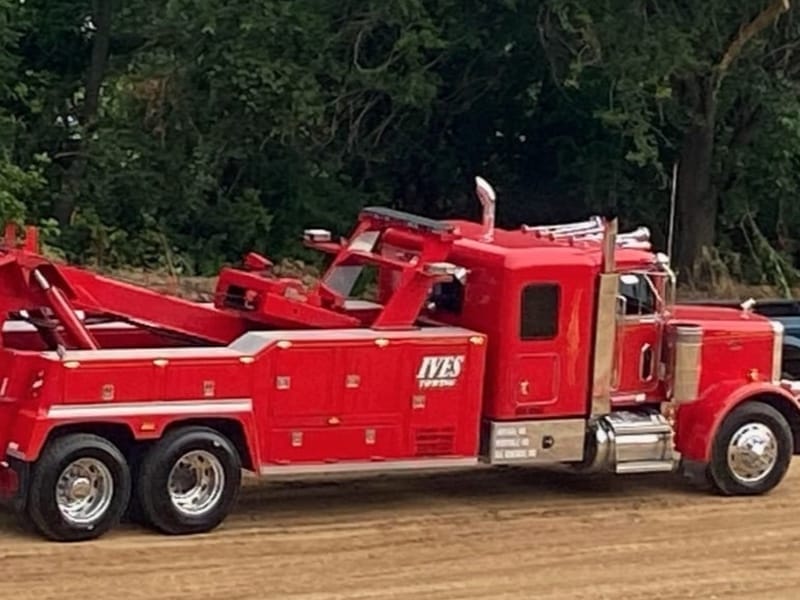
Ives Towing & Semi Truck Heavy Wrecker has been family owned and operated since 1954. We have served Southern St. Louis and nearby Southern Missouri communities through decades of truck accidents, breakdowns, recovery calls, and late-night highway problems. Our I-55 semi towing work is backed by operators with long field experience and a practical approach to each scene.
We look at driver safety, traffic, truck position, cargo, damage, and destination before we move anything. I-55 semi towing may be a straight tow to a shop, a heavy recovery from a ditch, or a careful move after a crash near a tight ramp. On a cold night south of St. Louis, the best first ten minutes are usually simple: get clear, make the right calls, and let the scene settle before the truck gets moved.
FAQs
What should a truck driver do first after a semi accident?
Check for injuries and get clear of moving traffic. If the truck can move, pull it to the shoulder or another safer spot before making longer calls.
Should a driver call 911 after a truck crash?
Yes, if anyone is hurt, traffic is blocked, fuel is leaking, cargo has spilled, or another driver is involved. Police can help control the scene and create a report.
Is it safe to inspect the truck after a crash?
Only from a protected spot. Do not walk behind the trailer, stand near traffic, or crawl under the truck while vehicles are passing close by.
What details help dispatch after a semi accident?
Give the nearest marker, travel direction, lane position, trailer type, load status, visible damage, and spill concerns. Clear details help send the right truck.
Should a driver move cargo after a crash?
No. Leave cargo, straps, debris, and spilled freight alone until police, insurance, or the recovery crew can look at the scene.
Can a minor crash still need heavy recovery?
Yes. A truck may look mostly intact but still have steering, axle, brake, suspension, or trailer damage. The recovery plan depends on what still works.