One Collision, One Very Awkward Landing
There are classic trucks that spend most of their lives being carefully maintained, and then there are the unexpected moments that put all that work at risk. We got a call to Church Road in Arnold after a 1968 Chevy pickup, collided with another car and ended up across a guardrail. Our classic vehicle recovery in Arnold started with one question for our towing team: how were we going to get its front wheels back onto the road?
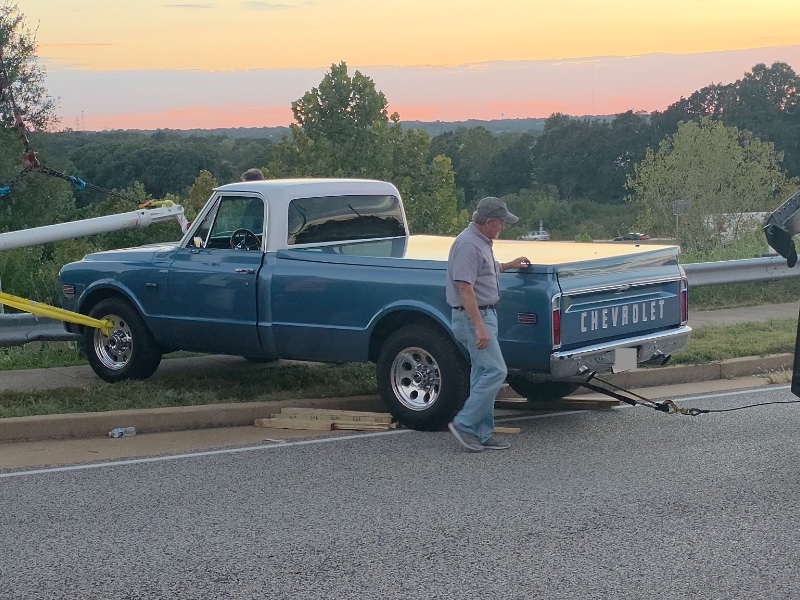
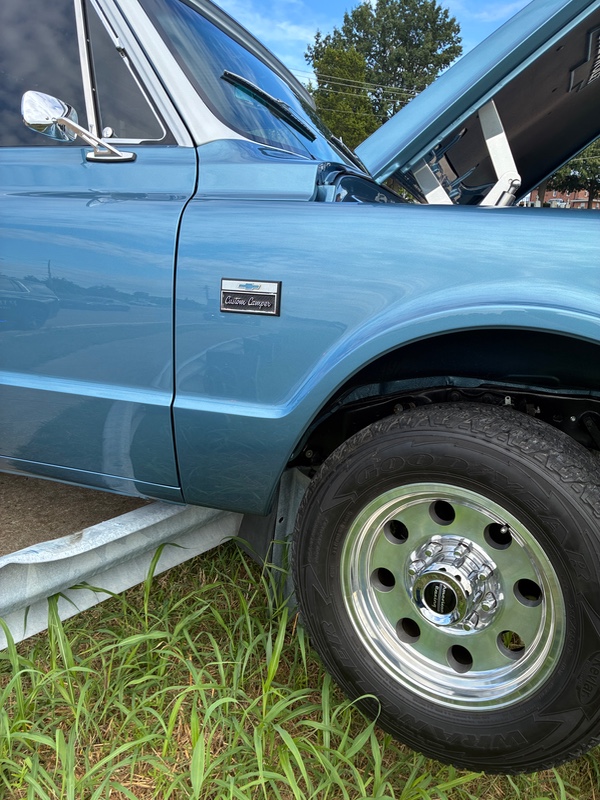
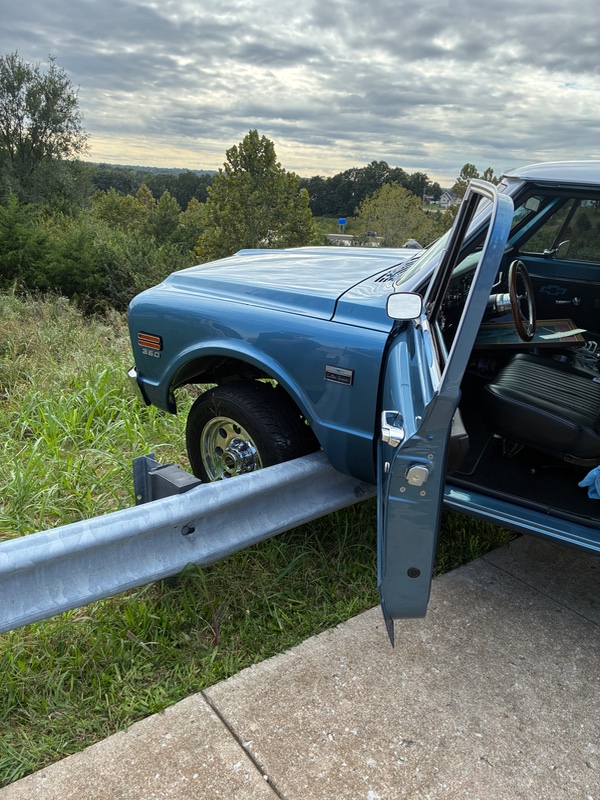
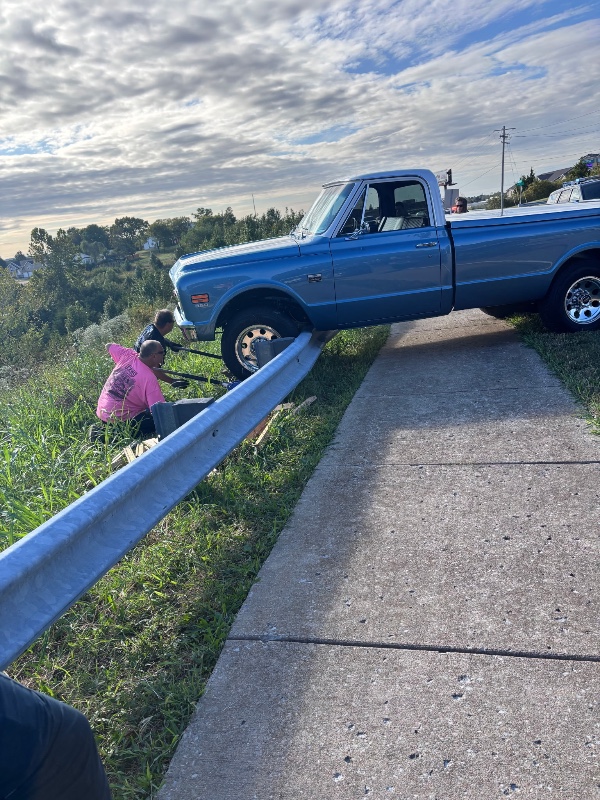
The collision had spun the pickup around and carried it up and over the barrier. When we reached it, the front tires were completely on the far side of the rail. The back of the truck was still toward the pavement, but the guardrail ran under the front. We couldn’t treat this like an ordinary pull onto a rollback.
The Rail Was Under the Truck
With an older vehicle like this Chevy, the clearance matters as much as the pulling power. The front wheels were over the rail, and the metal barrier was directly beneath the truck. If we dragged it backward without raising the front, the rail could catch the underside or bodywork. We needed a better path.
We started by jacking up the front tires to gain some clearance. It helped, but it didn’t solve the geometry of the situation. The guardrail wasn’t something we could move out of the way, and the drop on the far side left very little room to reposition the pickup from that direction.
Why We Moved Away From the Flatbed
We tried to work the flatbed into a usable position. On a more ordinary tow, we’d adjust the bed angle and load the truck from there. Here, the angle wasn’t right. The rail and the way the Chevy sat over it kept us from lining things up the way we needed.
At that point, we stopped trying to make the flatbed approach fit. The front of the pickup had to come up and over the guardrail first. That called for a different kind of lift, and we had the equipment on scene to make it happen.
A Controlled Lift Over the Steel
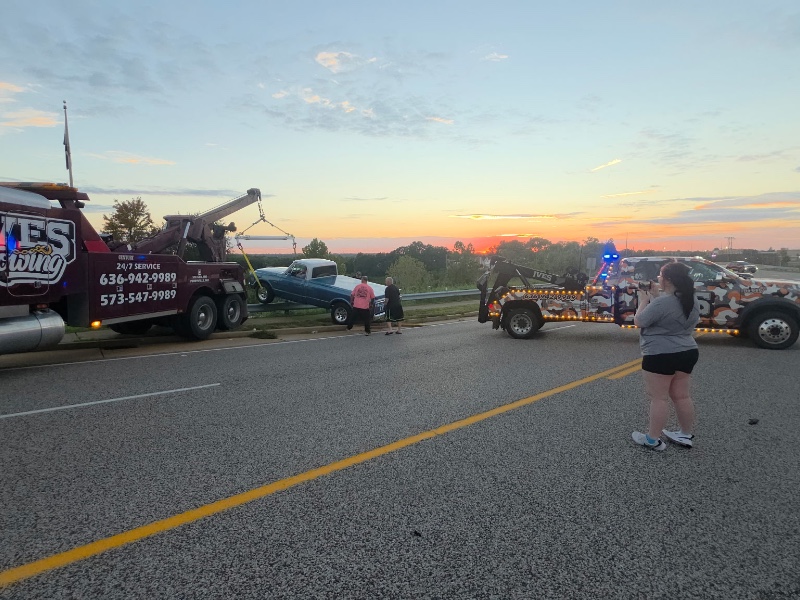
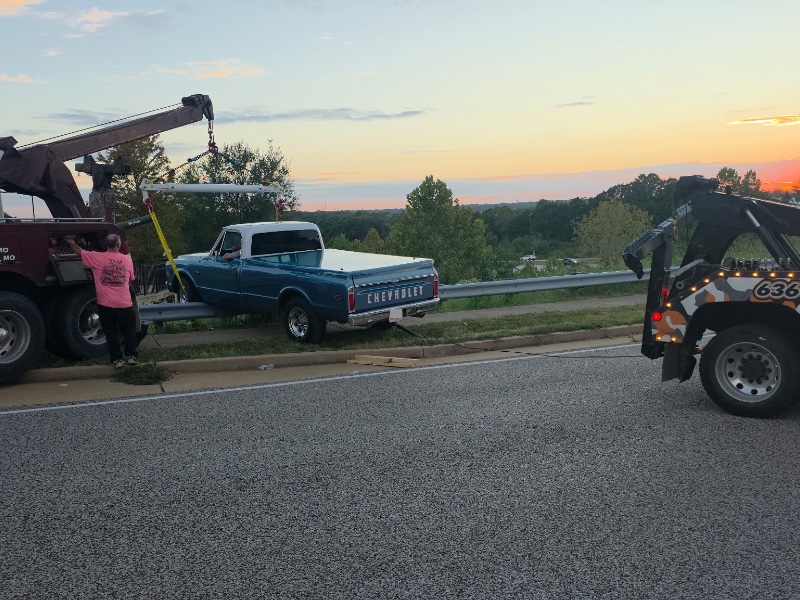
We positioned our heavy-duty wrecker and rigged a spreader bar over the front of the Chevy. Another Ives truck was connected at the rear, giving us control from both ends. In this Arnold classic truck recovery, the point wasn’t to haul the pickup harder. We needed to raise its front end until the tires cleared the top of the rail.
As the front rose, we watched the space between the truck and the guardrail. The Chevy had to move high enough to clear the barrier before we could bring it back toward the pavement. Recovering a classic pickup in Arnold this way meant treating the lifting and the movement back onto the road as separate parts of the job.
Once we had the clearance, we lifted the pickup free of the guardrail and brought it back onto the roadway. The spreader bar let us lift from above instead of dragging the front of the truck across steel. That was the change that made the recovery possible.
What Made This One Different
The truck’s reported value added another concern, but the recovery problem came down to its position. When we handle classic vehicle recovery around Arnold, a few inches of clearance can decide whether a flatbed works or a heavy-duty lift is necessary. This time, the rail sat exactly where the Chevy needed to travel.
Our classic vehicle towing in Arnold called for three decisions:
- Create clearance by jacking the front tires.
- Recognize when the flatbed angle wasn’t workable.
- Lift the front over the rail before bringing the pickup back onto the road.
How Ives Towing Handles Classic Vehicle Recovery in Arnold
At Ives Towing, we handle towing and recovery work in Arnold and across the southern St. Louis metro area. We know that a pickup on a guardrail needs a different approach from a car stranded in a parking lot. On this call, our flatbed couldn’t get the angle, so we turned to a heavy-duty wrecker, spreader bar, and a second truck to manage the recovery.
Our classic vehicle recovery work in Arnold is about adapting to the vehicle and the place it ends up. For this 1968 Chevy, that meant jacking for clearance, lifting rather than dragging, and getting the pickup back over the rail without making the situation worse.
Frequently Asked Questions
What kind of pickup was involved?
The truck was a 1968 Chevrolet pickup, reportedly valued at approximately $100,000.
How did the pickup end up over the guardrail?
The pickup collided with another car near a parking lot on Church Road in Arnold. The impact spun the truck around and sent it over the guardrail.
Why couldn’t a flatbed be used?
We tried positioning the flatbed, but the angle wasn’t workable with the pickup straddling the guardrail. We needed to lift the front of the truck clear first.
What does a spreader bar do during a recovery?
A spreader bar helps position lifting lines and manage the forces applied to a vehicle during a lift. It can be particularly useful when clearance is limited.
Why were two tow trucks used?
We used a heavy-duty wrecker to lift the front of the Chevy, with another Ives truck connected at the rear to help control its movement.
Did the pickup suffer any damage?
The extent of damage from the collision was not confirmed. Our recovery approach was intended to avoid causing additional damage while getting the truck off the guardrail.