The Challenges Start Long Before the Wheels Roll
Construction sites rarely give us an easy setup. With House Springs equipment towing, we often see soft ground, narrow access points, uneven grades, and machines parked in places that made sense during the job but create a headache at pickup time. A skid steer tucked behind pallets or a mini excavator sitting near fresh trenches can turn a simple move into a project that needs patience and a careful eye when towing.
We like to get a feel for the whole site before we touch a chain or line up a truck. That means checking the surface, the machine’s position, the available turning room, and the condition of the path leading out to the road. A clean exit matters just as much as a secure load. Small details at the start help us avoid delays later.
Ground Conditions Change the Whole Move
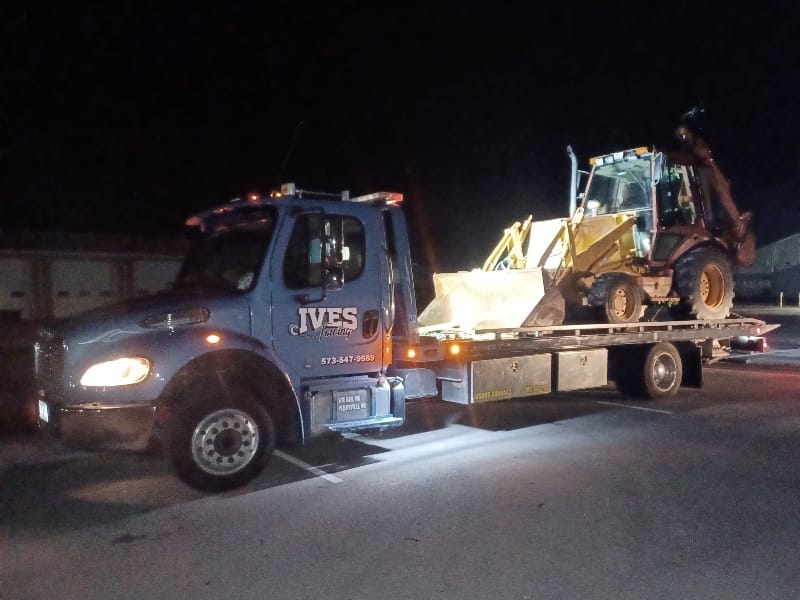
Packed gravel behaves one way, wet clay behaves another, and fresh fill can fool anyone who assumes it will hold the weight of a truck. We pay close attention to tire tracks, ruts, and any area that looks recently disturbed. A machine may drive across part of the site just fine, while a loaded tow vehicle needs a firmer path and more room to stay stable.
Access Points Can Be Tighter Than They Look
Job site gates, temporary fencing, and stacked material can squeeze the exit down fast. We also watch for low tree limbs, utility lines, and traffic near the entrance. A route that works for a pickup truck may not work at all for a trailer or a larger towing setup.
Every Machine Asks for a Different Approach
A compact loader, telehandler, boom lift, and excavator each bring their own loading concerns. Weight distribution, attachment position, track condition, and ride height all shape the plan. We want the machine to sit correctly on the deck and travel without shifting, bouncing, or putting stress in the wrong place.
Before loading, we usually check a few basics:
- attachment width and height
- visible leaks or loose parts
- battery condition if the unit needs power
- tire or track damage
- the clearest path to the loading point
That short checklist keeps the move grounded in facts. It also helps everyone on site know what needs attention before the machine leaves. A few minutes spent checking the details can save a lot of time at the road entrance.
Timing Matters on Active Job Sites. A Lot.
Crews still need to work, deliveries still show up, and site supervisors usually have a full plate. We try to coordinate the move around that rhythm instead of interrupting it. That makes it easier to load cleanly and get out without blocking the wrong lane or trapping another machine behind us.
Route Planning is Part of the Job
The trip does not begin at the gate. We think about bridge limits, road width, traffic flow, steep grades, and the best place to unload at the destination. In the bottom half of a move, route decisions become just as important as loading decisions, especially when a particular House Springs equipment towing job involves bulky machines or awkward attachments.
Ives Towing Keeps House Springs Equipment Towing Practical and Clear
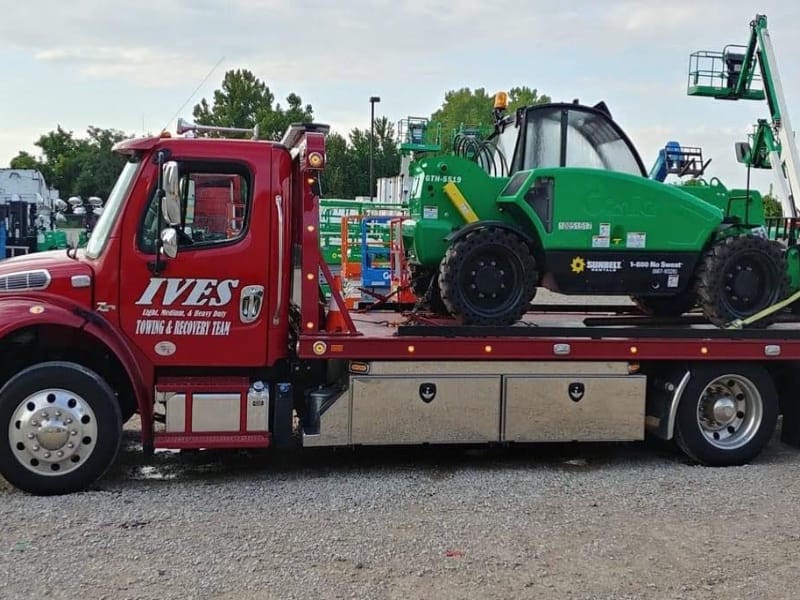
At Ives Towing, we take a steady approach to House Springs equipment towing because construction equipment rarely gives us a perfect setup. We handle House Springs equipment towing with attention to site access, load position, and the road plan after departure. That is true for House Springs equipment towing tied to a local contractor, a rental return, or a machine move between properties. Our work also includes roadside help, recovery support, and towing for a wide range of vehicles, so we bring that broad field experience into House Springs equipment towing every day. If you’re business needs a tow, we’ve got the right truck for you!
FAQ
How is heavy construction equipment loaded onto a tow truck or trailer?
The loading process depends on the type of machine and the site conditions. Operators typically position the trailer on stable ground, lower ramps, and guide the equipment slowly into place. The machine must sit with balanced weight across the trailer before secure tie downs hold it firmly during transport.
What types of construction machines usually need transport services?
Common equipment includes skid steers, mini excavators, compact track loaders, telehandlers, boom lifts, and small bulldozers. Contractors often move these machines between job sites, rental yards, and maintenance locations.
Do construction machines need preparation before transport?
Yes. Operators often remove loose attachments, check fluid leaks, and confirm that moving parts are secured. Lowering buckets or booms and locking controls also helps prevent movement while the equipment travels on the trailer.
Why do some job sites make equipment removal difficult?
Construction areas change constantly. Fresh soil, narrow entrances, stacked building materials, and temporary fencing can limit space for loading equipment. These conditions require careful planning before bringing in a towing vehicle.
How much does construction equipment typically weigh?
Weight varies widely depending on the machine. A compact skid steer might weigh around 3,000 pounds, while a larger excavator can weigh well over 20,000 pounds. The towing setup must match the size and weight of the equipment being transported.
What should contractors check before scheduling equipment transport?
It helps to confirm the equipment type, approximate weight, attachment size, and access points at the job site. Knowing the pickup and delivery locations ahead of time helps the towing team plan the best approach for loading and transport.